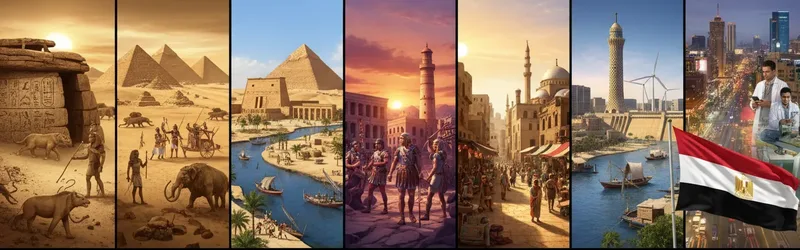

The sands of Egypt whisper tales of a civilization deeply intertwined with the divine. For millennia, the ancient Egyptians structured their lives, their understanding of the cosmos, and their hopes for the afterlife around a complex and vibrant religious system. This polytheistic faith, centered on a vast pantheon of gods and goddesses, permeated every aspect of society, from the pharaoh's divine right to rule to the farmer's plea for a bountiful harvest.
At the heart of Egyptian religion was the concept of Ma'at, an overarching principle of truth, justice, order, and cosmic balance. Ma'at was not just an abstract idea but a goddess herself, often depicted with an ostrich feather, symbolizing her lightness and purity. Maintaining Ma'at was the paramount duty of the pharaoh, believed to be a divine intermediary between the gods and humanity. His actions were crucial for ensuring the prosperity and stability of Egypt, a land dependent on the predictable cycle of the Nile River.
The Egyptian pantheon was incredibly diverse, featuring hundreds of deities, many of whom possessed multifaceted roles and evolving mythologies. These gods were not distant, aloof beings but often interacted with humans, influencing natural phenomena, human emotions, and the destinies of individuals and the nation. Their forms were equally varied, depicted as humans, animals, or hybrids, reflecting their specific attributes and domains.
One of the most prominent deities was Ra (or Re), the sun god. As the creator deity and king of the gods, Ra embodied life, warmth, and the relentless cycle of day and night. He was often depicted as a man with the head of a falcon, crowned with a sun disk encircled by a cobra. His daily journey across the sky in his solar barque was a powerful metaphor for the cyclical nature of existence and the triumph of light over darkness.
Osiris, the god of the afterlife, the underworld, and resurrection, played a pivotal role in Egyptian beliefs about death and rebirth. According to myth, Osiris was murdered and dismembered by his jealous brother Set, only to be resurrected by his devoted wife Isis. This story formed the basis of the funerary rituals and the belief in an eternal existence beyond death. Pharaohs were often identified with Osiris, hoping to achieve a similar rebirth in the afterlife.
Isis, the goddess of magic, motherhood, healing, and protection, was one of the most beloved and widely worshipped deities. Her fierce loyalty to Osiris and her role in protecting her son Horus made her a powerful symbol of feminine strength and devotion. She was often depicted as a woman with a throne symbol on her head or as a winged goddess.
Horus, the falcon-headed god of the sky, kingship, and protection, was the son of Osiris and Isis. He avenged his father's murder by battling Set, ultimately reclaiming the throne of Egypt. The pharaoh was considered the earthly embodiment of Horus, legitimizing his rule and his role as protector of the land.
Set, the god of chaos, storms, violence, and the desert, represented the disruptive forces that threatened the order of Ma'at. Despite his negative associations, Set was also a necessary part of the cosmic balance, representing the untamed aspects of nature and the challenges that must be overcome. He was often depicted as a man with the head of an unidentified creature, often referred to as the "Set animal."
Other significant deities included Thoth, the ibis-headed god of wisdom, writing, and magic, who was the scribe of the gods; Anubis, the jackal-headed god of mummification and the protector of the dead; Hathor, the cow-headed goddess of love, music, dance, and joy; and Amun, who rose to prominence as a king of the gods, often syncretized with Ra as Amun-Ra.
The practice of religion in ancient Egypt involved elaborate rituals performed in temples by priests and priestesses. These temples were not just places of worship but also economic and administrative centers. Daily offerings of food, drink, and incense were made to the statues of the gods, believed to sustain their divine essence. Festivals, both public and private, punctuated the Egyptian calendar, celebrating key myths and agricultural cycles.
The afterlife was a central preoccupation for the ancient Egyptians. They believed that death was not an end but a transition to another existence. The mummification process was designed to preserve the body for the soul's use in the afterlife, and elaborate tombs, such as the pyramids, were built to house the deceased and provide them with the necessities for their eternal journey. The Book of the Dead, a collection of spells and incantations, was intended to guide the deceased through the dangers of the underworld and ensure their successful judgment before Osiris.
The evolution of Egyptian religion saw shifts in the prominence of certain deities and the development of syncretism, where different gods were merged or identified with one another. The cult of Amun, for instance, grew immensely powerful during the New Kingdom, leading to Amun-Ra becoming the supreme national deity. Even as the civilization waned and was influenced by other cultures, the profound impact of its unique religious beliefs and its rich pantheon of gods left an indelible mark on the history of human spirituality.
Keywords: Ancient Egypt, Egyptian Religion, Egyptian Deities, Ra, Osiris, Isis, Horus, Set, Ma'at, Egyptian Mythology, Afterlife Beliefs, Polytheism
Comments
No comments yet. Be the first to share your thoughts.
Join the conversation
Log in to leave a comment on InEgypt.