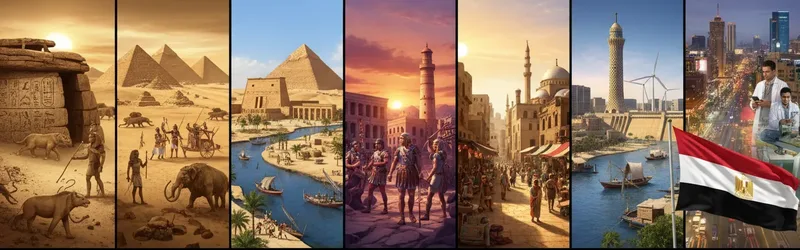

Egypt, a nation at the crossroads of Africa, the Middle East, and the Mediterranean, stands at a critical juncture, facing a complex web of geopolitical challenges in its near-term future. These challenges are not abstract theoretical concerns but tangible realities that directly impact Egypt's national security, economic stability, and regional influence.
Foremost among Egypt's near-term geopolitical concerns is the existential threat posed by water scarcity, particularly in relation to the Grand Ethiopian Renaissance Dam (GERD). Ethiopia's continued unilateral filling and operation of the dam on the Blue Nile, without a binding and equitable agreement with Egypt and Sudan, directly threatens Egypt's lifeline – the Nile River. The vast majority of Egypt's population and its agricultural sector are critically dependent on the Nile's waters. Any significant reduction in flow could lead to widespread food insecurity, economic collapse, and potential social unrest, creating a severe geopolitical vulnerability. Egypt's diplomatic efforts to secure a fair water-sharing agreement are paramount, and the failure to achieve this raises the specter of future tensions and instability.
Compounding these resource challenges are significant demographic pressures. Egypt has one of the largest and youngest populations in the Middle East and North Africa, with a substantial portion of its citizens under the age of 30. This burgeoning youth demographic presents both an opportunity and a profound challenge. On one hand, it represents a potential demographic dividend for economic growth and innovation. On the other hand, without adequate job creation, education, and social services, this large young population can become a source of social discontent, increased migration pressures, and internal instability. Managing these demographic realities is intrinsically linked to Egypt's geopolitical resilience, as internal stability is a prerequisite for effective regional engagement and defense.
The most immediate and persistent geopolitical challenge for Egypt lies in the volatile security landscape of its immediate neighborhood. The ongoing conflict in Sudan, Egypt's southern neighbor, poses a significant threat. The spillover of violence, potential refugee flows, and the rise of extremist groups in the region are all deeply concerning for Cairo. Egypt has a vested interest in a stable Sudan, and the current instability directly strains its border security and necessitates increased resource allocation for defense and humanitarian aid considerations.
Furthermore, the protracted instability in Libya continues to be a major geopolitical headache. The presence of various armed factions, external interference, and the persistent threat of terrorist groups operating within Libya directly impact Egypt's western frontier. Cairo has consistently advocated for a unified Libyan government and the expulsion of foreign mercenaries, recognizing that a stable Libya is paramount for regional security and to prevent the flow of arms and militants into Egypt.
The Eastern Mediterranean gas dispute and regional rivalries represent another significant near-term geopolitical challenge. Turkey's assertive stance, coupled with ongoing disputes over maritime borders and hydrocarbon exploration, creates a complex dynamic. Egypt, having recently discovered significant natural gas reserves, is keen to assert its energy interests and foster cooperation, but the regional power plays, particularly involving Turkey and its alliances, necessitate careful diplomatic maneuvering to secure its economic and strategic interests.
The ongoing Israeli-Palestinian conflict, while not a new challenge, continues to demand Egypt's strategic attention and diplomatic engagement. As a key mediator and neighbor, Egypt plays a crucial role in de-escalating tensions and facilitating peace initiatives. Any significant escalation of the conflict directly impacts regional stability and could lead to increased refugee movements and security concerns for Egypt.
Egypt's relationship with global powers, particularly the United States and European nations, while generally stable, also presents near-term geopolitical considerations. Maintaining strong economic and security partnerships while navigating shifting global alliances and potential geopolitical realignments requires consistent diplomatic engagement. Egypt's strategic position makes it a key partner in counter-terrorism efforts and regional stability, but it must also carefully manage its relationships to avoid being caught in the crossfire of larger international power struggles.
Finally, the evolving dynamics within the Arab world, including the ongoing realignment of regional powers and the rise of non-state actors, demand Egypt's constant geopolitical vigilance. Navigating these shifting alliances and competing interests requires astute diplomacy and a clear understanding of its own strategic objectives. The desire for regional leadership and influence necessitates proactive engagement rather than reactive responses to emerging challenges.
In conclusion, Egypt's near-term geopolitical future is defined by the critical interplay of water security, demographic pressures, and a complex regional security environment. Successfully navigating these multifaceted challenges will require robust diplomacy, strategic foresight, significant investment in human capital and infrastructure, and a continued commitment to regional stability and cooperation.
Comments
No comments yet. Be the first to share your thoughts.
Join the conversation
Log in to leave a comment on InEgypt.