Ancient Egypt, a civilization that captivates the imagination with its monumental pyramids and powerful pharaohs, was also home to millions of ordinary people whose lives, though less grand, were rich with tradition, hard work, and a deep connection to the Nile River. For the vast majority, life revolved around agriculture, family, and their local community, far removed from the opulent courts of royalty.
The backbone of Egyptian society was the farmer. Their existence was inextricably linked to the annual inundation of the Nile. This predictable flood, bringing fertile silt to the land, was the lifeblood of their survival. They would cultivate crops like barley, wheat, emmer, flax, and vegetables using simple tools such as wooden plows drawn by oxen or donkeys. Life was a cycle dictated by the river: preparing the fields before the flood, sowing seeds as the waters receded, tending to the crops during the growing season, and finally, the arduous task of harvesting. The surplus from their labor not only fed their families but also formed the basis of taxes paid to the state and temple.
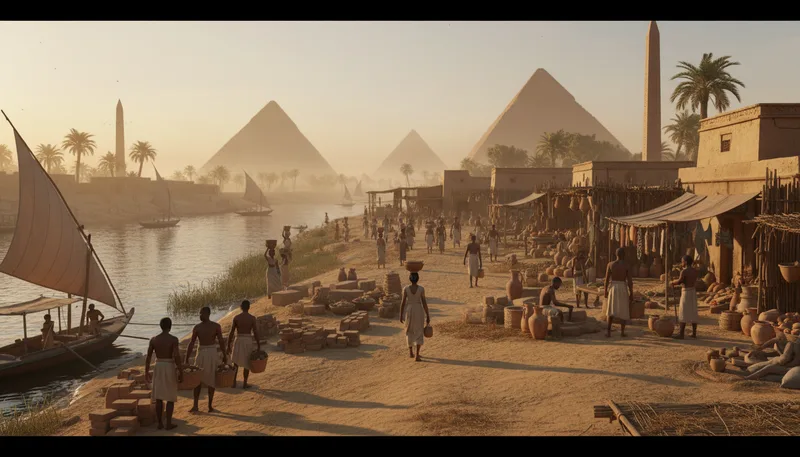
Beyond the fields, skilled artisans and craftsmen formed another significant segment of ordinary life. Potters shaped clay into essential vessels for storing food and water, while weavers produced linen textiles that were the primary clothing material. Carpenters built furniture, boats, and even parts of homes. Blacksmiths, though their numbers were smaller, worked with precious metal to create tools and decorative items. These individuals often lived in towns and villages, their skills passed down through generations. Their work, while vital, meant long hours and often physically demanding labor. The quality of their creations, even for everyday use, was often remarkably high, reflecting a dedication to their craft.
Housing for ordinary Egyptians was typically simple and functional. Homes were usually constructed from sun-dried mud bricks, which were readily available and provided good insulation against the heat. These dwellings were generally small, consisting of a few rooms, often with a flat roof that could be used for sleeping in cooler nights or for storage. Furniture was minimal, featuring low stools, mats for sleeping, and simple chests. Cooking was done on small braziers or over open fires, often in a courtyard. Sanitation was basic, with waste often disposed of in pits or designated areas outside the home.
Family was the cornerstone of ancient Egyptian society. Marriage was common, and while arranged marriages sometimes occurred, love matches were also frequent. The family unit was responsible for raising children, passing down skills, and providing support. Children played a crucial role in the household, assisting with chores from a young age. Education, for ordinary children, was largely informal, learned through observation and apprenticeship. While literacy was not widespread among the general populace, scribes and those in specialized professions would have received formal training.
Diet for the average Egyptian was relatively simple but varied. Bread made from wheat or barley was the staple, accompanied by vegetables like onions, garlic, lettuce, and beans. Fish from the Nile provided an important source of protein, and occasionally, poultry or small game might be consumed. Beer, brewed from barley, was a common and nutritious beverage, consumed by all ages. Meat was a luxury, typically reserved for special occasions or for the wealthier classes.
Religion permeated every aspect of Egyptian life, including for the ordinary person. While grand temples were dedicated to the major deities, everyday people also participated in religious rituals and festivals. They offered prayers and small votive offerings at local shrines and household altars. Belief in the afterlife was strong, and even ordinary Egyptians desired to provide for their deceased loved ones in the tomb, though on a much humbler scale than the elaborate provisions for pharaohs. Small amulets and charms were worn for protection against evil spirits and to bring good fortune.
Social mobility was limited but not entirely absent. An individual with exceptional talent or fortunate circumstances might rise through the ranks, most notably through becoming a scribe. The ability to read and write opened doors to administrative roles, which offered more comfortable lives and greater influence. However, for most, life remained within the bounds of their inherited social standing, with hard work and community contributing to their well-being.
The legal system was also a part of ordinary life. Disputes were often settled within communities or brought before local officials. While the concept of justice was important, the practicalities of law could be experienced through witnessing trials or being involved in legal proceedings, though usually on a much smaller scale than the grand pronouncements associated with royal decrees.
In essence, the life of an ordinary ancient Egyptian was one of constant engagement with the natural world, particularly the Nile. It was a life of labor, family obligations, community ties, and a deep-seated spirituality. While they did not build pyramids or rule empires, their collective efforts, their resilience, and their adherence to ancient traditions were the true foundation upon which the magnificent civilization of ancient Egypt was built. Their stories, though often unwritten, are vital to understanding this enduring culture.
Comments
No comments yet. Be the first to share your thoughts.
Join the conversation
Log in to leave a comment on InEgypt.