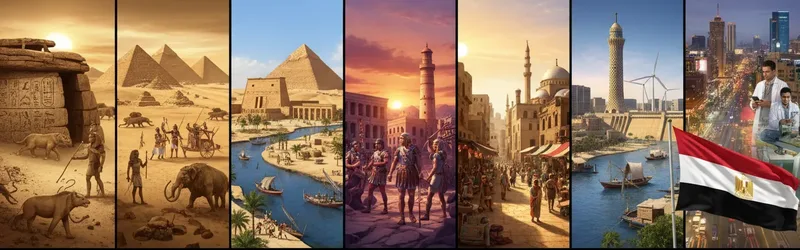

The city of Luxor, often described as the world's greatest open-air museum, offers a journey through time that is unparalleled in Egypt. While the West Bank draws many for its tombs, the East Bank—home to the sprawling Karnak Temple Complex, Luxor Temple, and the bustling city centre—remains the heartbeat of this ancient capital. Navigating these historic sites alongside the modern rhythms of local life provides a comprehensive experience of what Luxor has to offer.
Beginning your journey at the Karnak Temple Complex is essential. As the largest religious building ever constructed, Karnak is not merely a single temple, but a vast collection of sanctuaries, pylons, and obelisks built over 1,500 years. The Great Hypostyle Hall is the site's crown jewel, featuring 134 massive sandstone columns arranged in 16 rows. Standing amidst these towering pillars, one can grasp the sheer scale of the pharaonic ambition. Beyond the hall, do not miss the Sacred Lake, where priests once performed purification rituals, or the obelisk of Hatshepsut, which stands as a testament to the power of one of Egypt’s most famous female pharaohs.
Transitioning from the ancient grandeur of Karnak to the city centre, the Luxor Temple offers a stark contrast in layout and atmosphere. Unlike other temples, Luxor Temple was not dedicated to a single god but was a site for the rejuvenation of kingship, where many pharaohs were crowned. The temple is remarkably well-preserved and sits right in the middle of modern Luxor. Walking through the Colonnade of Amenhotep III under the evening lights is a transcendent experience. The temple’s accessibility from the city streets allows visitors to seamlessly move from the quiet majesty of stone carvings into the vibrant activity of the downtown market.
Just outside the gates of Luxor Temple lies the Avenue of Sphinxes. Recently restored to its former glory, this 2.7-kilometer path once connected Luxor Temple to Karnak. Walking a portion of this ceremonial route allows visitors to appreciate the scale of the ancient processions that took place during the Opet Festival. The sphinxes, lined perfectly along the walkway, provide a bridge between the two major religious centers of the East Bank.
In the heart of the town centre, the Luxor Museum stands as a masterpiece of modern curatorial design. Unlike the crowded displays of other national museums, the Luxor Museum is spacious and expertly lit, showcasing a collection of high-quality artifacts recovered from the region. The highlights include the statue of Thutmose III, the stunning wall of Akhenaten’s temple, and the remarkably preserved royal mummies of Ahmose I and Ramesses I. It serves as a necessary educational anchor to help contextualize the monumental ruins seen earlier in the day.
For those looking to understand the contemporary culture of the city, the Luxor Souq provides an authentic local experience. Located in the streets radiating from the Luxor Temple, the market is a kaleidoscope of scents, sounds, and colors. This is where you will find the best examples of local craftsmanship, including alabaster carving, intricate embroidery, and traditional spices. Navigating the narrow alleys offers a chance to interact with local merchants and witness the daily commerce that has sustained this city for centuries.
No trip to the city centre is complete without a stroll along the Corniche. This riverside promenade runs parallel to the Nile and offers spectacular views of feluccas—traditional wooden sailing boats—gliding across the water. It serves as the city’s social hub, especially at sunset when the temperature drops and the air fills with the sounds of local life. From the Corniche, you can easily access the ferry landings to the West Bank or find a quiet cafe to observe the convergence of modern Luxor and the timeless Nile.
Finally, a visit to the Mummification Museum, tucked away on the northern end of the Corniche, is a fascinating niche stop. While small, it provides incredible insight into the ancient Egyptian preoccupation with the afterlife. It houses perfectly preserved mummified remains of cats, crocodiles, and fish, alongside the tools and resins used in the embalming process. It is a quiet, contemplative site that balances the massive scale of the temple complexes with the intimate realities of ancient funerary practice.
Ultimately, the appeal of the East Bank lies in this seamless integration of the past and the present. Whether you are walking through the shadows of Karnak’s columns, marveling at the artifacts in the Luxor Museum, or bargaining for tea in the city centre, you are witnessing a living history. Luxor remains a place where the grandeur of ancient civilizations is not tucked away in a remote corner, but woven into the very fabric of the city's daily existence.
1 Comment
test
Join the conversation
Log in to leave a comment on InEgypt.